Marketing an off-plan property project: a practical guide
From positioning the project to following up leads with their consent: the steps a developer needs before and after launch, and what buyers need to see before they decide.
An off-plan project is sold before anyone can see it. The buyer pays up front for a promise: a location, a plan, and a unit that does not exist yet. That makes it different from marketing anything finished. The job is not only to get attention, but to build enough trust for someone to make a large decision based on images and documents. This guide walks through the practical steps a developer needs, from the first planning day to well after launch.
Position the project before any ad
Many projects launch with the same phrases: prime location, modern design, high quality. They do not help buyers compare, because every competitor says them too. Positioning means deciding exactly who the project is for, and why that person should choose it over nearby alternatives at a similar price and location.
Before writing a line of copy or designing a single ad, get sales, marketing and design in one room and answer these questions in writing:
- Who is the main buyer: a family looking for its first home, an investor after rental income, or someone moving up to more space?
- What actually sets the location apart: proximity to a main road, schools or services you can name?
- What problem does the project solve: more space, privacy, shared amenities, or a more accessible entry price?
- What will the buyer compare it with, and what makes your project clearer than those options?
- What can we not promise? Settling this early protects the brand from commitments that are hard to keep.
The result is a single positioning sentence that everything else is built on: the project name, the campaign messages, the order of the website pages and the first page of the brochure.
Different content for each stage
A project moves through stages, and buyers ask different questions at each one. Content that works at launch is not enough halfway through construction.
Before launch: build-up and early registration
The goal here is a list of genuinely interested people, not unit sales. Content that introduces the location and the general idea is enough, with a simple registration page that says what people get for signing up: notice of the launch date, or an early look at plans and prices. Do not publish details that have not been approved; changing them later confuses the people who registered.
Launch: the full picture
At launch, buyers need everything that helps them decide: the master plan, unit types and sizes, specifications, payment plan and expected handover date. This stage carries most of the visual production and campaign spend, and the sales team should be ready to respond before the ads start, not after.
During construction: proof
After launch the question shifts from "what will it look like?" to "is it on track?". Regular site updates, aerial footage of progress and steady messages to those who bought and those still considering. This content keeps current buyers confident and convinces the hesitant.
Near handover: reality replaces the render
As units near completion, real photography of units and amenities becomes more persuasive than any visualisation, and messages move toward visits, viewings and the remaining units.
Visual production: what does the buyer need to see?
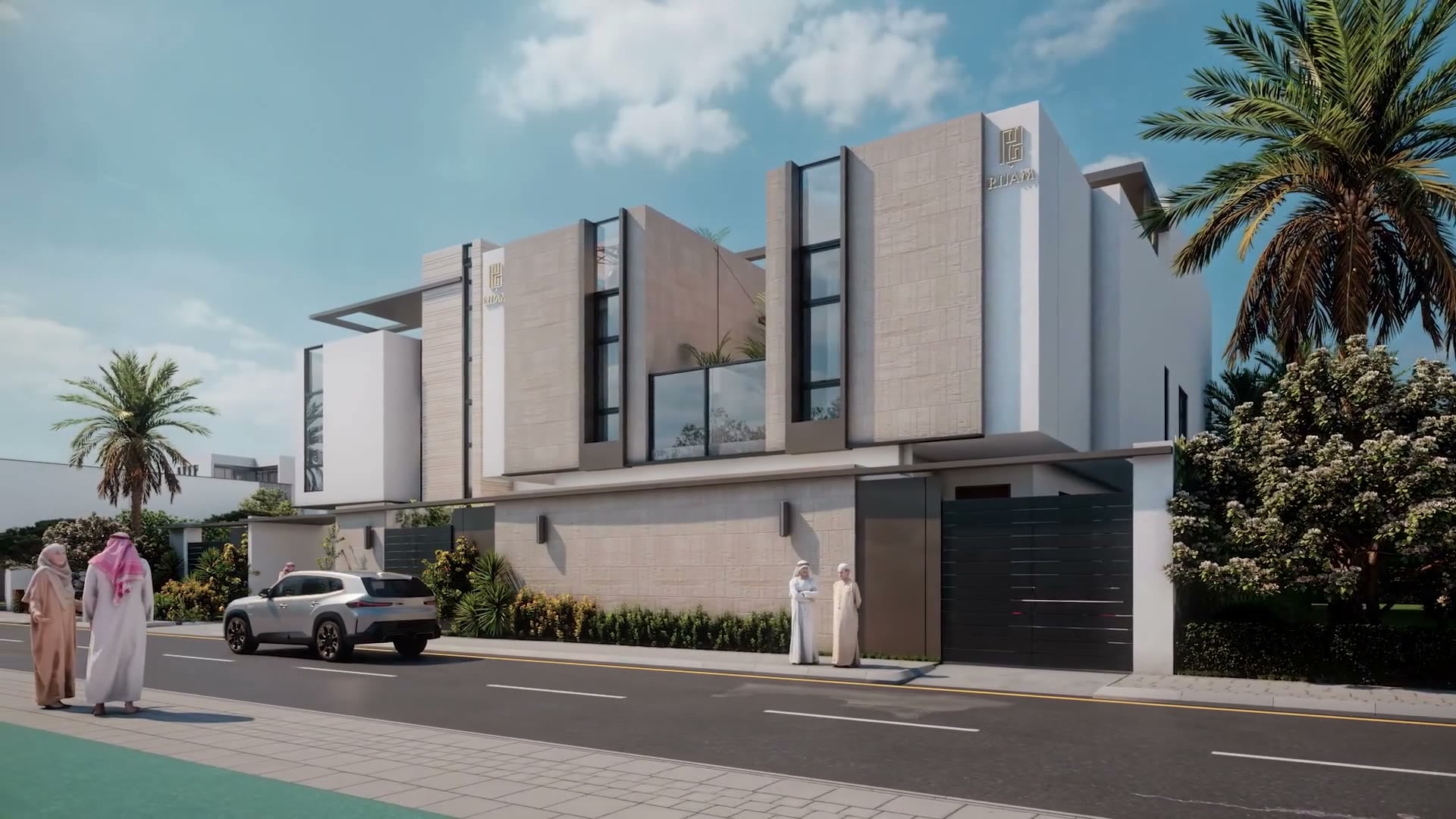
Off-plan, 3D visualisation stands in for the site visit. But a beautiful film is not enough on its own. Each type of visual answers a different question, and should be planned around that question rather than around the look:
- Location map: where the project sits among roads, districts and services, and how far it is from what matters to the buyer.
- Master plan: how buildings, amenities and open spaces are arranged inside the project.
- Exterior walkthrough: façades, rooftops and outdoor spaces by day and at dusk.
- Interior walkthrough: living areas, bedrooms, finishing and lighting, often what buyers linger on most.
- Explanatory diagrams: construction stages and building systems, for those who want to understand what sits behind the façade.
Make sure the visuals match the approved plans, and label them clearly as artist impressions when they are. A buyer who finds a large gap between the film and the unit at handover loses trust in the developer's future projects too. And cut short versions of every film in each platform's format from the start, instead of trimming them in a rush later.
The project website and unit pages
Every campaign ends on a page, and this is where many projects lose interested buyers. One general project page is not enough, because buyers are looking for a specific unit. Give the project its own site or section, and give each unit type its own page with:
- The floor plan with actual room dimensions.
- Images or clips from the walkthrough of that specific unit type.
- Specifications and finishes in plain language, not general claims.
- Availability, and the payment plan where it makes sense to publish it.
- One clear contact button and a short form tied to that unit.
Keep the pages fast on mobile, since most visits from ads arrive on a phone, and design them in Arabic first, then English if the project targets both audiences.
Capturing leads and following up with consent
The form is the moment a visitor becomes a lead, and every extra field is a reason to leave. Ask only for what you need to follow up: name, mobile number and the unit type they are interested in, perhaps the city. Sales can collect the rest on the first call.
Consent is part of the form, not a legal footnote. Tell people in plain words how their data will be used and how you will contact them, ask for explicit consent to marketing messages, and give them an easy way to opt out. This is what the Personal Data Protection Law expects, and it is also what makes follow-up welcome rather than intrusive.
After submission comes the part that matters most: the data should reach the CRM directly, with its source and the campaign it came from, and sales should call as soon as possible. A lead left waiting has usually already contacted another project.
A lead nobody follows up is not a lead. It is an advertising cost.
Campaigns by channel
Each channel plays a role in the buyer's journey. The common mistake is posting the same message, in the same format, everywhere:
- Short-video platforms: strong shots from the 3D walkthrough in the first seconds, to build awareness of the project.
- Search ads: for people actively searching for units in the district or city, landing on the unit page rather than the home page.
- Professional networks: when the audience is investors or buyers purchasing to invest.
- Direct messages to the early-registration list: with their consent, and with something exclusive such as the launch date or first choice of units.
- Retargeting: for people who viewed a unit page without registering, with a message close to what they saw.
Before any campaign, make sure the regulatory requirements for advertising the project and selling off-plan are complete, and that ads show the details the relevant authorities require.
The brochure: print and digital
The brochure still has its place in the sales office and at exhibitions, but today it is mostly sent as a file to a phone. Design it in two versions: a full print edition and a light digital one whose pages turn easily on a small screen. Order the pages the way buyers think: location, then the project, then unit types with their plans, then specifications and how to get in touch. Keep it consistent with the website; a size or price that differs between the two raises doubt immediately.
Measure what actually matters
Views and likes are easy numbers, but they do not sell units. Decide what you will measure before launch, set up tracking on the site and forms, and tag every campaign link with its source so you know where each lead came from:
- Leads from each channel, and the cost of each.
- How many of them turned into a visit or reservation, not just registrations.
- How quickly sales responds to new leads.
- The most-viewed units against the best-selling ones; the gap between them points to a problem with price or presentation.
Review these numbers weekly with sales, not marketing alone, and stop whatever does not bring serious buyers, however good it looks.
In short
Marketing an off-plan project is one chain: clear positioning, content that fits each stage, honest visuals that answer the buyer's questions, pages that lead to a specific unit, fast follow-up with the buyer's consent, and measurement focused on reservations rather than easy numbers. Any weak link wastes what was spent on the rest.